
Buying
What Should I Know Before Buying a Waterfront Home in Key West?
Scott Forman
October 6, 2026 · 10 min read
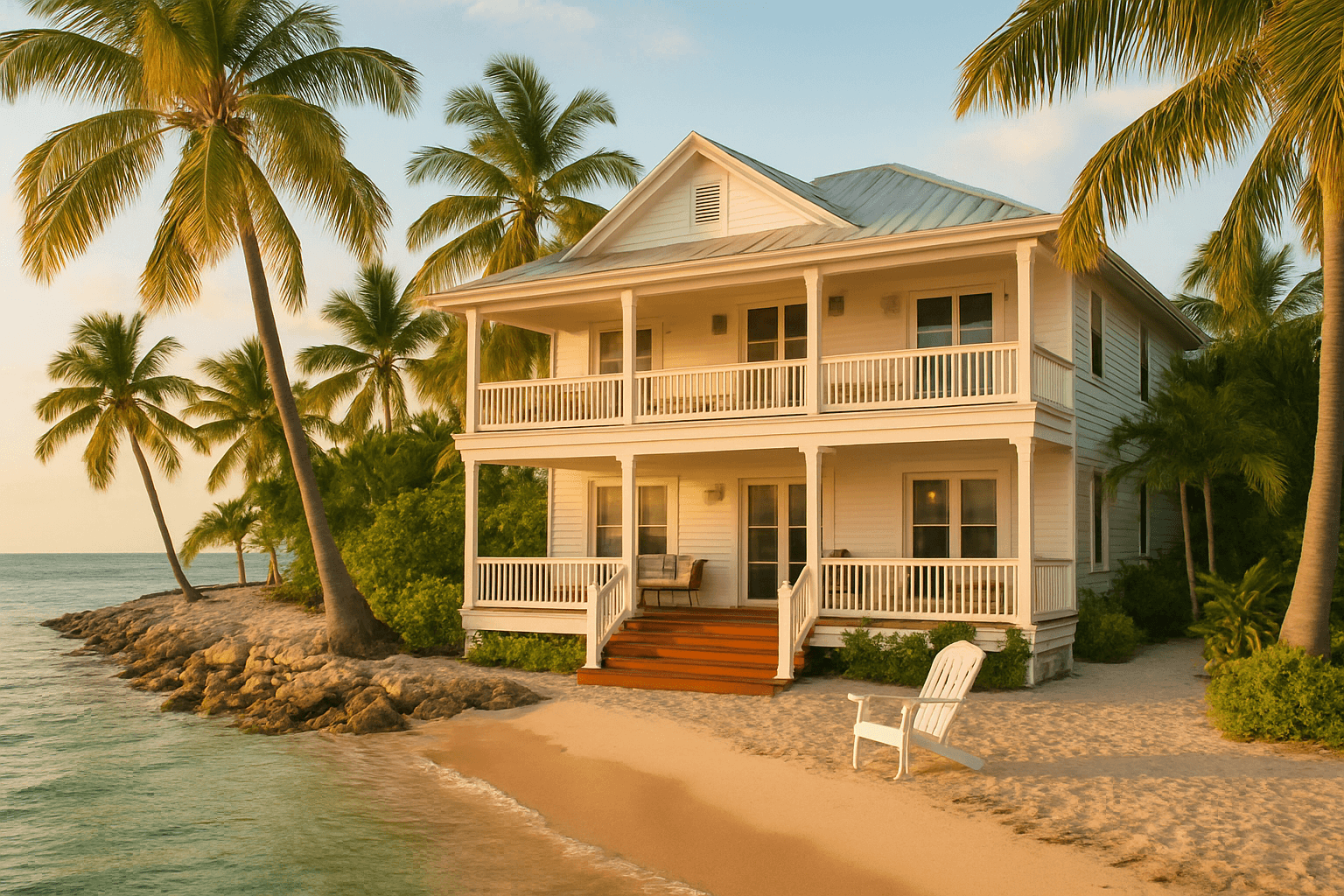
# What Should I Know Before Buying a Waterfront Home in Key West?
Before buying a waterfront home in Key West, verify the dock and seawall permits, inspect their condition, confirm the water depth and route for your boat, review the survey and title rights, check flood and elevation information, and price the ongoing maintenance. “Waterfront” describes a location. It does not guarantee legal dockage, deep water, open access or a structure that fits your plans.
Here’s what matters: you are not buying only the house. You may also be taking responsibility for a seawall, dock, lift, utilities over the water and a set of permits that cross local, state or federal agencies. Those items can materially affect daily use, future work, insurance, resale and the price you should pay.
What does “waterfront” mean in Key West?
It can mean several different things.
A home may front a canal, basin, harbor or open water. It may have a seawall but no dock. It may have a dock that is too short, too shallow or otherwise unsuitable for your vessel. It may have a view without direct water access. In a condominium or planned community, the waterfront feature may be common property rather than something the owner controls.
Do not treat these terms as interchangeable:
| Listing term | What it may mean | What to verify |
|---|---|---|
| Waterfront | The parcel or community borders water | Survey, ownership line and actual access |
| Water view | Water is visible from part of the property | View from the residence and whether it can change |
| Dockage | A dock, slip or mooring is represented | Ownership, assignment, dimensions, permits and rules |
| Boatable water | A vessel can potentially use the route | Depth, clearance, route, tides and vessel specifications |
| Open-water access | The route reaches larger navigable water | Fixed obstructions, channel conditions and practical travel time |
| Beach access | A right or route to sand | Public entrance or recorded private right |
A photograph can show attractive water and still leave every important ownership and boating question unanswered.
Will the dock and waterway work for my boat?
Start with the vessel, not the listing description.
For a buyer, I’d want the boat’s length, beam, draft, height and weight in hand before deciding that a property works. Then compare those numbers with the dock, lift, slip and full route from the property to the water you intend to reach.
Check:
- Usable dock and slip dimensions
- Boat-lift capacity and cradle configuration
- Water depth at the dock and along the route
- Conditions at lower water levels, not just during one showing
- Turning room and neighboring structures
- Fixed bridges, overhead lines or other clearance limits
- The route from the property to open navigable water
- Whether association or marina rules limit vessel size or type
NOAA’s electronic navigational charts are useful for regional route planning and show depths, aids to navigation and other charted features. They are not a substitute for property-specific verification at a private dock. If vessel fit is essential, use current charts and get the dock, lift, depth and route checked by qualified marine professionals.
Do not rely on “deep water,” “ocean access” or “minutes to open water” without the measurements and route that apply to your boat.
Are the dock, boat lift and seawall legally permitted?
Do not assume an existing structure is approved because it looks permanent or has been there for years.
The City of Key West has a specific dock-permit checklist. It calls for ownership information, a survey showing the proposed dock location, a site plan depicting the mean high-water line and signed and sealed engineered drawings. The checklist also says additional authorization from the U.S. Army Corps of Engineers or Florida Department of Environmental Protection may be required for work over water or wetlands.
Florida DEP separately regulates many alterations involving surface waters and state-owned submerged lands. Some single-family dock projects may qualify for a state exemption or self-certification. That does not mean every dock is exempt, and it does not replace other approvals that may apply.
Before closing, review the record for each waterfront improvement:
- Dock
- Boat lift
- Seawall or bulkhead
- Davits
- Electrical service at the dock
- Plumbing or water service
- Platforms, roofs or canopies
- Shoreline stabilization
- Dredging or other bottom work
Look for the original permits, approved plans, revisions, inspections and final status. The City’s eTRAKiT system allows the public to search basic permit and property information. Florida DEP’s Map Direct and permit-search tools can help identify state records, verified exemptions and self-certifications.
Here’s the important part: a permit search is evidence gathering, not a legal conclusion. If records are incomplete or the existing work differs from the plans, address that during the contract period with the proper agencies and professionals.
What should I know about the seawall?
A seawall is part of the property’s structure and ownership cost, not background scenery.
Have the wall and cap evaluated by someone qualified to assess marine construction. Visible cracks, movement, voids, corrosion, settlement, failed joints or loss of material may need more investigation. The condition of tiebacks and concealed components may not be obvious during a general home inspection.
Also determine who is responsible for it. The answer may be the individual owner, an association, multiple owners or another entity, depending on the parcel and governing documents.
Ask for:
- Prior seawall permits and engineered plans
- Repair history and invoices
- Any inspection or engineering reports
- Open proposals or planned projects
- Association budgets, reserves and assessments when applicable
- Written clarification of maintenance responsibility
- A current repair or replacement estimate if concerns are identified
Do not use a generic cost-per-foot estimate as your final budget. Access, design, adjacent structures, environmental conditions and permitting can change the scope substantially.
Which property and title records should I review?
The survey and title work need to match the waterfront you think you are buying.
A current survey should show the parcel, improvements, dock or waterfront structures when applicable, encroachments and relevant boundaries. The City’s dock checklist specifically calls for a survey and the mean high-water line for a proposed project.
The title review should address recorded rights and restrictions that affect the waterfront. Depending on the property, that may include easements, association documents, dock or slip assignments, shared maintenance obligations and other recorded instruments.
Useful public starting points include:
- The Monroe County Property Appraiser’s parcel and tax-roll information
- The Monroe County Clerk’s official-records search for deeds, mortgages, liens and recorded documents
- City of Key West permit and property searches
- Florida DEP permit and mapping tools
Those databases are screening tools. They do not replace a current survey, title commitment or legal review. The Clerk’s online system itself warns that online images are not certified copies.
For a buyer, I would want the legal description, survey, title commitment, association documents and the represented waterfront rights to tell the same story.
Can I repair or enlarge the dock after I buy?
Maybe, but don’t price the property on that assumption.
A larger platform, different lift, roof, additional pilings or a longer dock may be limited by local rules, state standards, submerged-land authorization, resource protection, setbacks, water depth or federal review. Florida DEP’s dock guidance includes design standards tied to the location and resources present.
If a future change is part of the purchase plan:
- Describe the proposed project specifically.
- Compare it with the existing approved plans.
- Ask the City which local reviews apply.
- Check state permit, exemption and submerged-land requirements.
- Determine whether federal or sanctuary authorization is involved.
- Obtain a feasibility opinion and realistic budget before removing the relevant contract protections.
“Room for a bigger dock” is not approval for a bigger dock.
How do flood zone, elevation and insurance affect a waterfront purchase?
Waterfront status does not replace the normal Key West flood and insurance review. It makes property-specific information even more important.
Check the current flood map designation, available elevation documentation, lender requirements and property-specific insurance quotes. Do not use the seller’s current premium or a neighbor’s policy as your future number.
Our guide to AE, X and VE flood zones in Key West explains what the map designations mean. The guide to Key West flood-insurance costs explains why the premium must be quoted for the exact property and buyer situation.
If the parcel is beachfront or affected by Florida’s Coastal Construction Control Line, review the additional coastal-property information and permitting requirements that apply. Florida DEP provides specific Map Direct guidance for buyers and real-estate professionals.
What ongoing costs should I include in the budget?
Waterfront ownership can add expenses that are easy to miss when the focus stays on the view.
Build a property-specific budget for:
- Seawall monitoring, maintenance and future work
- Dock and piling maintenance
- Boat-lift inspection, service and eventual replacement
- Marine electrical and plumbing components
- Hardware, decking, ladders and lighting
- Cleaning and treatment appropriate to the materials
- Association waterfront reserves or assessments
- Permitting, engineering and environmental review for future work
- Homeowners and flood insurance
- General exterior maintenance
- Vessel storage elsewhere if the dock is temporarily unusable
Ask what was done, when it was done, who performed it and whether the permits were finalized. An attractive new surface can hide older structural components underneath.
Does waterfront automatically make a Key West home worth more?
Waterfront can support value, but there is no universal premium.
Buyers pay for usable benefits. Legal dockage, practical boating access, a protected location, a strong view and well-maintained marine improvements may matter. Shallow water, limited clearance, unpermitted work, a failing seawall or high shared costs can reduce the benefit.
The comparison needs to be specific:
- Same type of waterfront
- Similar boating access
- Comparable dock and lift rights
- Similar seawall responsibility and condition
- Similar view and privacy
- Similar house, lot, condition and neighborhood
- Similar association obligations
- Recent enough sales to reflect current conditions
A canal home and an open-water home are not automatically comparable because both are labeled waterfront. The same is true for a private dock and an assigned community slip.
For valuation context, read How Much Is My Key West Home Worth?.
What is the waterfront-home due-diligence checklist?
Before treating the waterfront as part of the purchase value, I’d want clear answers to these questions:
House and land
- Does the survey match the physical property?
- What does the title commitment say about boundaries, easements and restrictions?
- Are the represented waterfront rights recorded and transferable?
- What are the flood zone, elevation and property-specific insurance terms?
Dock and boating
- Is the dock legally approved and finaled?
- Does the lift capacity and geometry fit the vessel?
- What are the measured depth and route limitations?
- Are there clearance or vessel restrictions?
- Is dredging allowed or realistically available if ever needed?
Seawall and structures
- What is the current condition?
- Who owns and maintains each component?
- Are there open permits, known repairs or planned projects?
- What do qualified inspections and estimates show?
Government and association records
- Do City, state and any applicable federal records align?
- Are exemption or self-certification claims documented?
- Do association rules allow the intended vessel, lift and alterations?
- Are reserves and planned assessments adequate for shared waterfront work?
Value and contract
- Do the comparable sales have genuinely similar water access?
- Does the contract provide enough time to review marine, title, permit, insurance and association information?
- Which unresolved items must be corrected, credited or accepted before closing?
Frequently asked questions
Does a waterfront Key West home always include a dock?
No. Some waterfront properties have a seawall, view or shared water frontage without a private dock. Verify what is included in the deed, survey, association documents and permits.
Can I add a boat lift to an existing dock?
Possibly. Florida DEP offers a self-certification process for some qualifying single-family dock projects, including adding a lift, but local and other approvals may still apply. Confirm the exact project before assuming it is allowed.
Is NOAA chart depth enough to confirm my boat will fit?
No. NOAA charts are useful for route planning and regional conditions. A buyer still needs property-specific information for the private dock, lift and access route.
Does a permitted dock prove the seawall is in good condition?
No. Permit status and physical condition are separate questions. Review the records and obtain the appropriate inspections.
Can I rely on the property appraiser’s map for the waterfront boundary?
Use it as a preliminary public record, not as a substitute for a current survey and title review.
Where can I search current Key West waterfront homes?
Use the Royal Palms Realty property search and then evaluate the dock, seawall, boating access, records and carrying costs for each property individually.
If you are comparing waterfront homes in Key West, Royal Palms Realty can help you narrow the search and organize the property-specific questions before you make an offer.
Useful Links & Sources
- City of Key West — Building Permit Requirements
- City of Key West — Dock Permit Application Checklist
- City of Key West — eTRAKiT Permit Search
- Florida DEP — ERP e-Permitting
- Florida DEP — Dock Permitting in Florida
- Florida DEP — Find an ERP Permit
- Florida DEP — Coastal Construction Control Line Map Guidance
- NOAA — Custom Charts and Electronic Navigational Chart Data
- Monroe County Clerk — Official Records Search
- Royal Palms Realty — Property Search
Compare Key West Waterfront Homes
Get in TouchRelated Reading
 Neighborhoods
Which Key West Neighborhoods Are Closest to the Beach?
Compare Casa Marina, Midtown East, Old Town South and Truman Annex for beach access, plus what Key West buyers should verify before purchasing.
 Selling
How Much Is My Key West Home Worth?
Find out what your Key West home is worth using recent comparable sales, current competition and the property-specific details that move value.
 Market
What Does $1 Million Buy in Key West?
See what $1 million buys in Key West now, including current inventory by property type and neighborhood plus the trade-offs buyers should expect.